What surfaces will you cross?
Ask the hosts or venue for a photo or description of the route from arrival to ceremony, meal and dance floor. Then plan for each surface.
| Surface | What it can do to a long hem | What to plan |
|---|---|---|
| Lawn | Damp grass can mark and weigh down the hem; heels may sink | Lift the skirt front; consider a wider heel |
| Gravel or dirt path | Dust and small stones can catch in the hem and decoration | Lift the skirt and keep to the centre of the path |
| Sand | Collects in folds and makes the skirt drag | Ask whether there is a walkway or matting |
| Wooden decking | Gaps between boards can catch narrow heels | Check the gaps against your heels |
| Stone steps | Uneven treads and a hem underfoot | Lift the front, use a handrail, take them slowly |
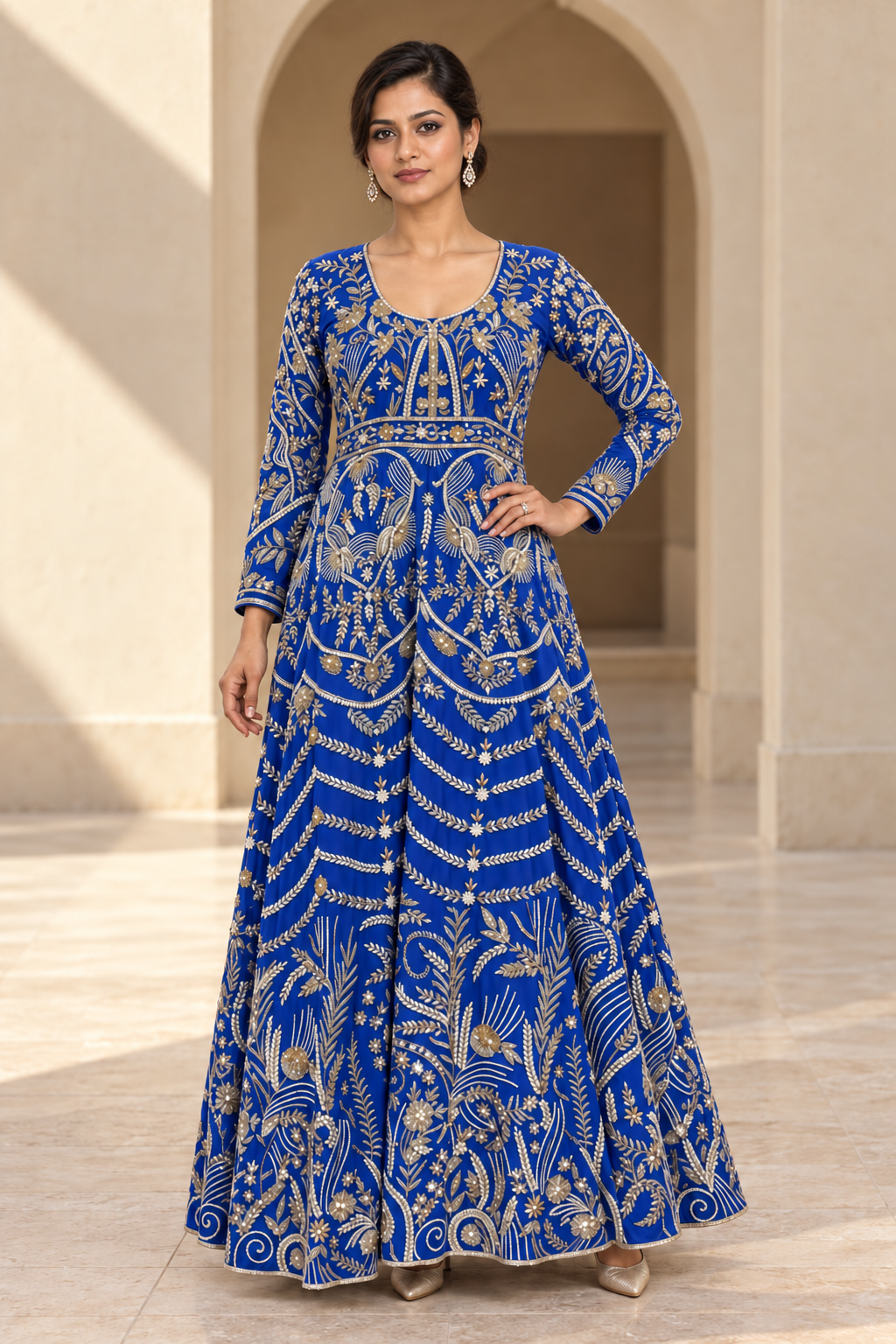
KAVEYRA's photographs show a long flared skirt. With any piece of that length, where the hem sits relative to the ground depends on fit and shoes, which you can only judge once you try it on.
Reference: KAVEYRA: Royal Blue Anarkali
What should you test before the day?
Avoid rehearsing outdoors in the garment itself; a test walk is not worth a marked hem. Separate the two questions instead:
- Wear your chosen shoes on a similar surface outdoors, without the outfit, and note whether they sink, twist or slip.
- Indoors, put on the full outfit with those shoes and walk the length of a room.
- Practise lifting the front of the skirt with one hand while holding a phone or small bag in the other.
- Climb and descend stairs, noticing which hand stays free for a rail.
- Sit on a folding chair and rise again, checking the skirt does not catch on the frame.
- Stand in front of a fan to see how the skirt and dupatta behave in a breeze.
How can you plan for weather?
Check the forecast the week before and again that morning, and ask the hosts whether there is a covered area or an indoor fallback.
- Sun: plan for shade and sun protection, and consider how long you may stand during the ceremony.
- Wind: a loose dupatta can lift and tangle. Decide how to secure it, and check before pinning delicate fabric or decoration.
- Rain: carry a large umbrella; a covered route matters more than any accessory.
- Cooling evening: bring a wrap or jacket that fits easily over long sleeves.
- Marks on the hem: resist treating them yourself on the day. Note what caused them and take the garment to a qualified cleaner along with its care label.
Your outdoor outfit checklist
- Photo or description of the route from arrival to seat
- Shoes tested on a similar surface
- Full outfit rehearsed indoors with those shoes
- A way to lift the skirt that leaves one hand free
- Dupatta secured, or a decision to carry it
- Umbrella, sun protection and an evening layer
- Indoor fallback confirmed with the hosts
- A clean cover for carrying the outfit if you change before leaving
YOUR NEXT STEP
Ask your host this week for the route between ceremony and reception, then test your shoes on a similar surface outdoors before rehearsing indoors in the full outfit.