What does the invitation actually ask for?
Invitations are brief, so treat each detail as a clue and each gap as a question.
| What you see | What it may suggest | What to confirm |
|---|---|---|
| Several events across one or more days | Each may have its own mood and dress expectations | Which events you are invited to, and whether any has a theme |
| A stated dress code | A general level of formality | Whether traditional dress is welcome or expected |
| A place of worship named | Customs for guests may apply | Whether to cover your head or remove shoes |
| Colour guidance, or none at all | Some families have colour preferences | Whether any colours are reserved for the couple or family |
| Day or evening timing | Different light, temperature and length of event | How long you will be there and whether there is a break between events |
How does the venue change the choice?
A long, full Anarkali behaves differently from room to room. In a banquet hall, think about steps up to a stage, crowded buffet lines and chairs set close together. In a place of worship, you may sit on the floor through a long ceremony and need to manage the skirt as you lower yourself and rise. In a hotel, expect corridors, lifts and doors between rooms.
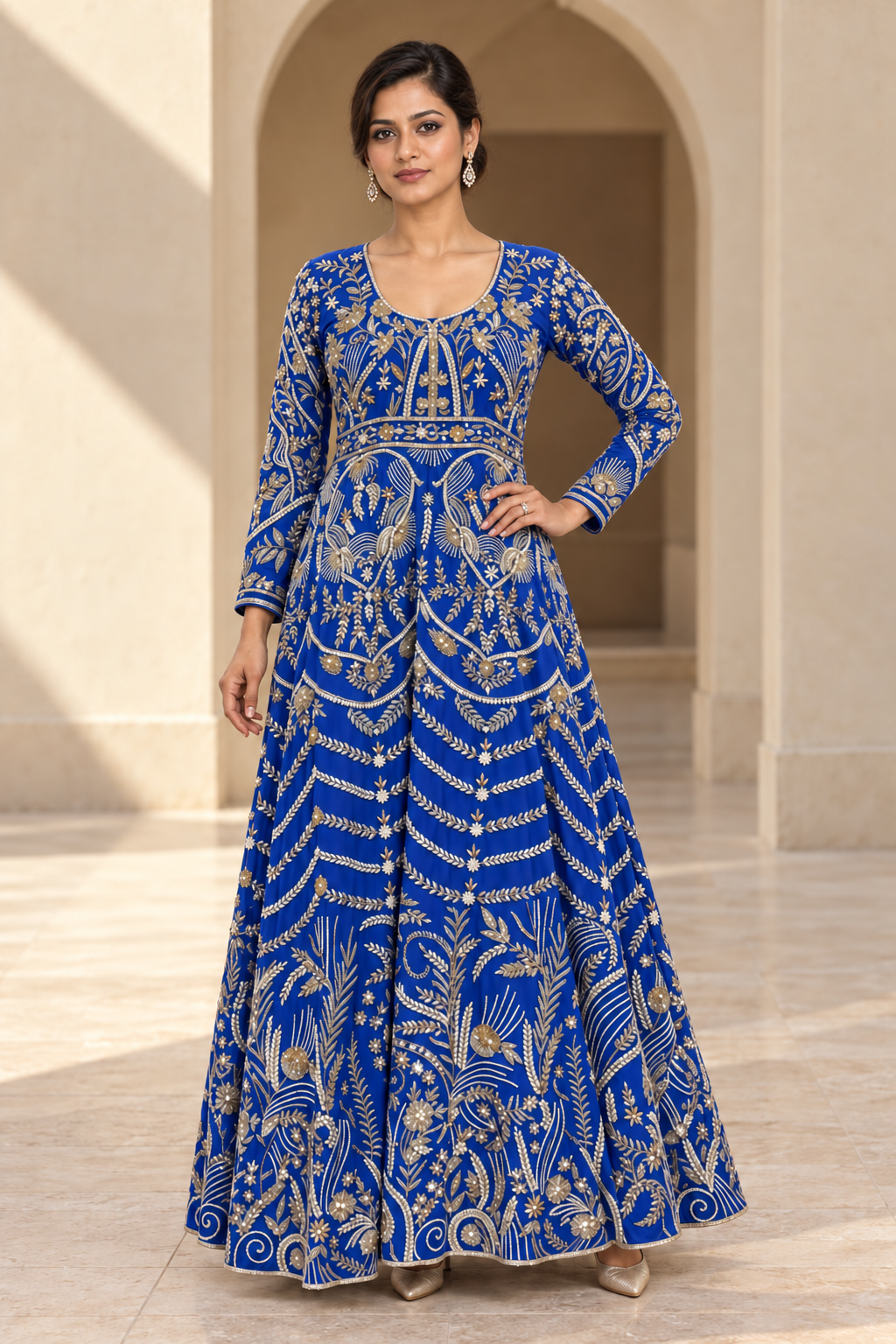
KAVEYRA's Royal Blue Anarkali, for instance, is photographed with a long flared skirt and long sleeves. With any silhouette like that, decide in advance where the hem and cuffs will go while you eat, greet people and move through a crowd.
Reference: KAVEYRA: Royal Blue Anarkali
How do you plan for ceremony and dancing?
Rehearse at home in the full outfit and the shoes you intend to wear, a few days before. Work through the sequence in order:
- Walk across the room, then up and down stairs, lifting the front of the skirt with one hand.
- Sit on a chair, then on the floor, for as long as you comfortably can, and stand again using your usual support.
- Eat something at a table and notice where the cuffs fall.
- Raise your arms within a comfortable range, then turn gently; watch where the dupatta goes.
- Hug someone or bend to greet an elder, and check that nothing shifts or catches.
- Manage the outfit in a small bathroom.
Note anything that needed two hands or a second attempt. That tells you what to adjust, secure or leave at home.
A message to send your host
Hosts are usually glad to answer a considered question early rather than field it on the day. Keep it short and send it well ahead:
“Hi [Name], we're so looking forward to the [event]! I'm planning to wear an Anarkali and wanted to check two things: are there any colours you'd prefer guests avoid, and is there anything I should know about the venue, such as floor seating, covering my head or removing shoes? Thank you, and no rush at all.”
If you are attending several events, ask about all of them in one message rather than several.
YOUR NEXT STEP
Reread the invitation tonight, fill in the third column of the table for each event you are attending, and send your host a single message covering every open question.