What problem are you trying to solve?
'It doesn't fit' is hard to act on. Try on the garment with your event shoes and underlayers, and describe each issue in plain terms: where it pulls, gapes, drags or restricts. Separate fit problems from style preferences, because the second kind may not justify altering embellished work.
- Where exactly is the issue, and on which side?
- Does it appear standing, sitting, or only when moving?
- Is it a comfort problem, an appearance problem, or both?
- Would you still wear the garment if this were left alone?
What must a tailor inspect?
Only someone handling the garment can judge what is feasible. Ask the tailor to look at, and explain:
- Whether there is seam allowance available where change is needed.
- Whether embroidery crosses the seam or sits near it.
- How the decoration is attached, and whether it can be safely unpicked or restitched.
- Whether a lining is present and how it is joined.
- How the skirt panels are cut, if length or flare is involved.
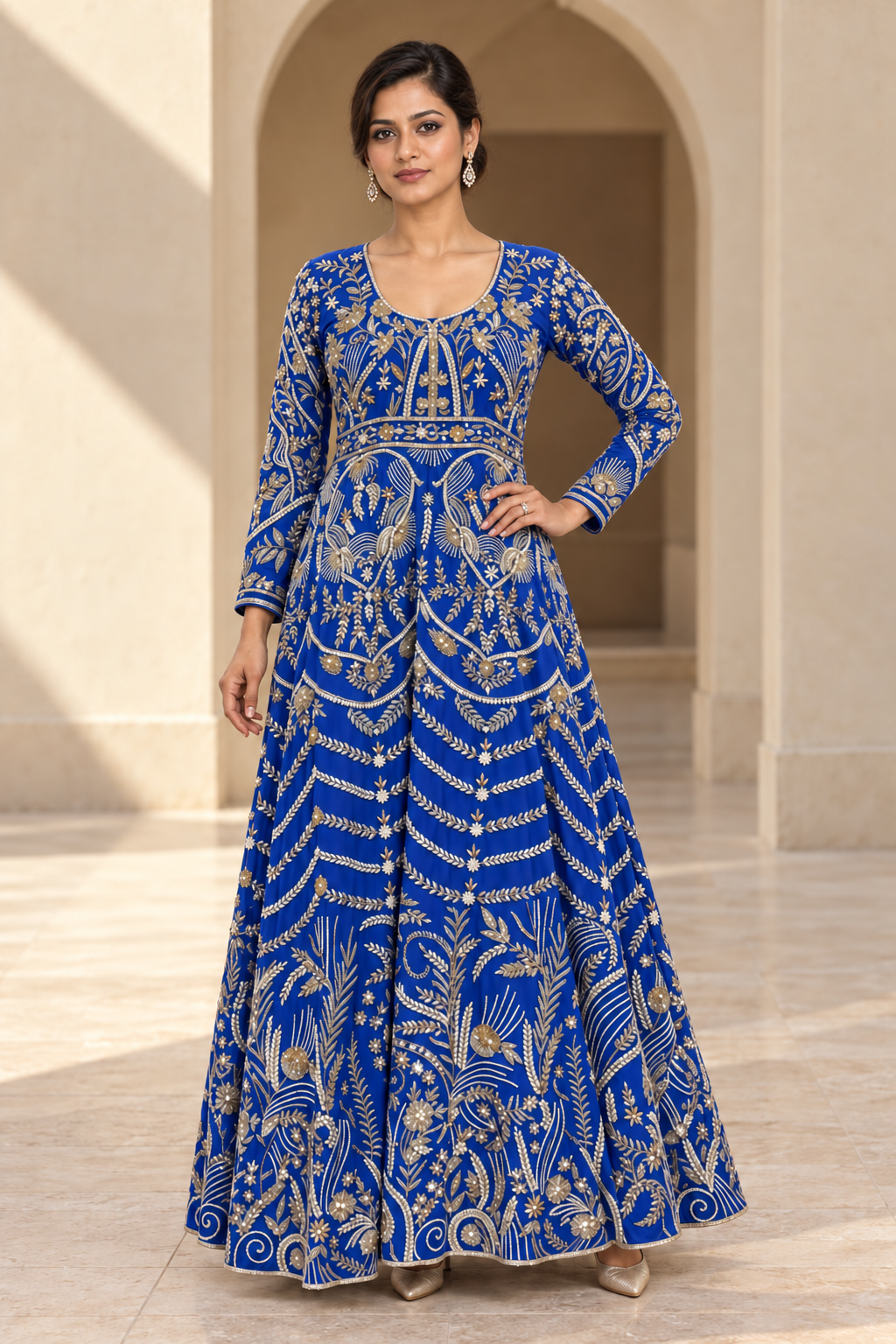
For a piece like the KAVEYRA Royal Blue Anarkali, pale-gold floral and bird motifs are visible in photographs, but the technique and construction are unconfirmed, so inspection matters even more.
Reference: KAVEYRA: Royal Blue Anarkali
How could a change affect the design?
| Proposed change | Design question to raise |
|---|---|
| Taking in a seam | Will motifs meet awkwardly or be lost into the seam? |
| Shortening a hem | Is there a decorated border that would be cut or moved? |
| Adjusting sleeves | Does decoration at the cuff need to be removed and replaced? |
| Changing the neckline | Would the motif layout still look balanced? |
Ask whether the change is reversible. A tailor may suggest a less invasive option, or advise leaving the garment as it is.
A written alteration brief
Copy and complete this before the appointment:
- Garment: [description and photos attached]
- Event date and latest acceptable completion date: [date]
- Problem 1: [location, when it happens, how it feels]
- Problem 2: [as above]
- Shoes and underlayers to be worn: [details]
- Areas of decoration I want left untouched: [details]
- Please advise: feasibility, risks to embroidery, whether the change is reversible, and any alternative approach.
- I would like to approve the plan before any cutting or unpicking.
YOUR NEXT STEP
Try the garment on with your event shoes today, note each fit issue without marking the fabric, then complete the written brief and bring it to a qualified tailor before agreeing to any cut.