What does each measurement describe?
| Type | Describes | Typical use |
|---|---|---|
| Body measurement | Your body, measured at the points and underlayers specified by the maker | Choosing a size from a body chart |
| Garment measurement | The finished garment, measured flat or around | Comparing with a piece you already own |
A chart should say which it is. If it does not, ask before relying on it.
What is ease?
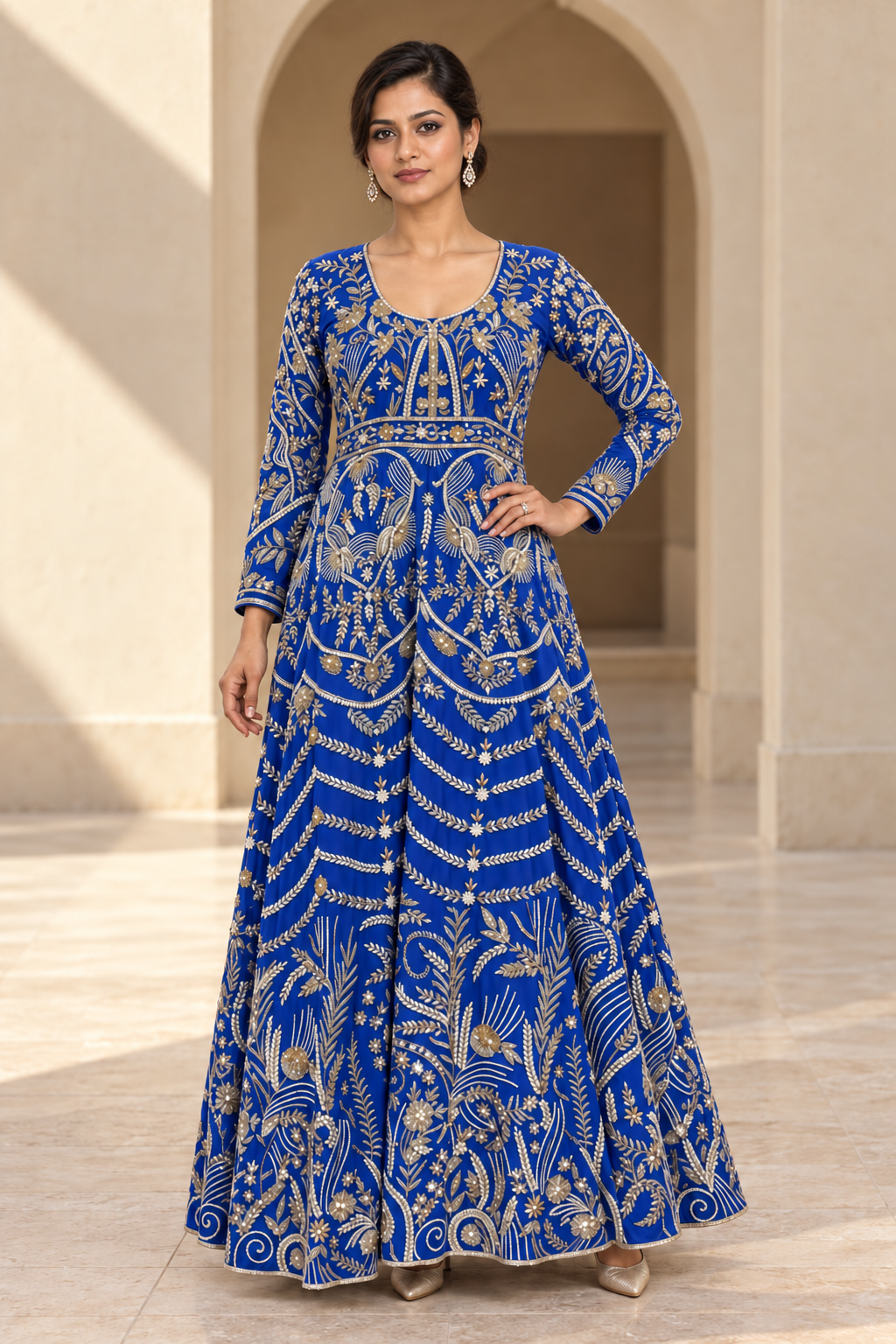
Ease is the difference between a finished garment measurement and the body it is meant for. Wearing ease allows movement, while design ease creates a silhouette, such as the flare of an Anarkali. No single allowance fits every garment, so you cannot reliably add a standard number to your body measurements.
Reference: Seamwork: Understanding Ease
How should two charts be compared?
- Confirm each chart is the same type before comparing.
- Match units; convert carefully between centimetres and inches.
- Compare like with like: bust to bust, length to length.
- Check where length is measured from, such as shoulder or waist.
- Note the differences rather than adjusting them yourself.
If one chart is body and the other garment, do not convert between them; the difference depends on the design.
Which numbers should you send?
For KAVEYRA, the detailed maker guide and measurements are not yet available, and no size chart is confirmed. The preorder planner holds a draft in page memory only; it does not submit, reserve or charge. Use this preparation for an appointment or when the guide opens.
A copyable note to keep ready:
- Body measurements taken on (date), in (unit):
- Bust / chest:
- Waist:
- Hip:
- Shoulder width:
- Height, and preferred shoe height:
- Questions: Is the chart body or garment? Which measurements does this piece need?
Reference: KAVEYRA: Preorder planner
A chart check before you compare numbers
Suppose one listing gives a flat width and another gives a full circumference. Putting those numbers side by side would be misleading even if both use centimetres. Ask how each value was taken and which point it describes. Do not automatically double an unfamiliar measurement: shaping, measurement position and the seller’s method may affect the comparison.
Similarly, a preferred finished length is a request about the garment, not a measurement of your body. Keep it in a separate field. An existing well-fitting garment can help explain a preference, but its numbers are only useful if the maker agrees they are relevant to the new design. Record the question rather than silently changing the value.
YOUR NEXT STEP
Save the questions and an empty measurement record. Once the maker provides the exact guide, record the requested numbers with their date, units and method.