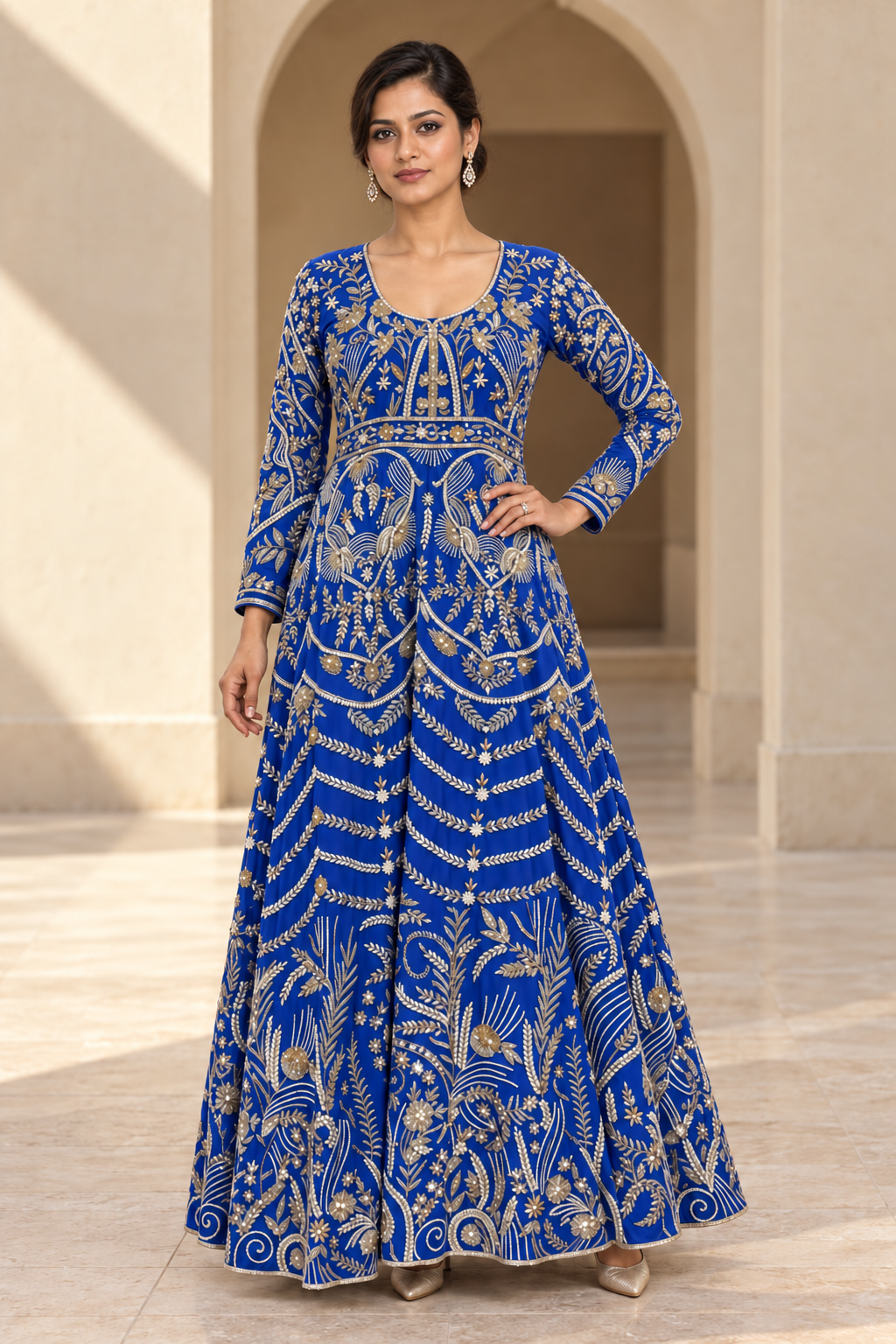
What must your dupatta do?
A dupatta can frame an outfit, add coverage at the shoulders or head, or simply carry colour. Write down its job before choosing a drape. The answers depend on the occasion, any venue or family expectations, and how much you will be moving.
| Need | Questions to answer | Leans toward |
|---|---|---|
| Free hands | Will you carry food, children or a bag? | Pinned at one shoulder |
| Head covering | Will you need it for a ceremony or venue? | A drape that can lift easily onto the head |
| Showing the bodice | Is the neckline or motif work the focal point? | Lighter, one-sided drapes |
| Warmth | Is the venue cool or outdoors? | Wider drape over both shoulders |
Three drapes to rehearse
These are common approaches rather than fixed names, and families often have their own versions.
- One-shoulder fall: gathered or pleated on one shoulder, the length falling behind. Keeps the front visible and the hands mostly free.
- Both-shoulder frame: laid across the back with ends falling forward over each arm. Adds coverage and warmth; can feel looser while moving.
- Cross-body: pinned at one shoulder, brought diagonally across the front and secured at the opposite hip. More secure for dancing, but covers more of the bodice.
How do you check movement and security?
Rehearse each drape in the shoes you will wear and run through a short sequence.
- Raise both arms as if hugging someone.
- Sit down and stand up from a chair.
- Bend to pick something off the floor.
- Walk and turn at a comfortable pace, using your usual support.
- Climb a few stairs, watching the dupatta ends.
- Lift the dupatta onto your head and back down.
- Check pins, brooches and earrings for anything caught in the fabric.
Use pins with care. Ask the maker where, if anywhere, pins can safely be used. Avoid piercing an unverified or delicate surface; a drape that needs no fastening may be a better option. Check any clip for pressure marks and catches before wearing it.
What if no dupatta is included?
For the KAVEYRA Royal Blue Anarkali, whether a dupatta is included has not been confirmed. Fibre and construction are also unconfirmed, so it is not yet possible to say how a separate dupatta would sit against it.
- Ask whether a dupatta is part of the piece before sourcing one.
- If sourcing separately, bring a colour reference of the blue and the pale-gold motifs.
- Consider whether you want it to match, echo the motifs or contrast.
- Rehearse the drape with the actual garment before the event.
Reference: KAVEYRA: Royal Blue Anarkali
YOUR NEXT STEP
Write down the dupatta's job for your event, rehearse the three drapes through the movement sequence, and keep the drape that stays secure without catching.